
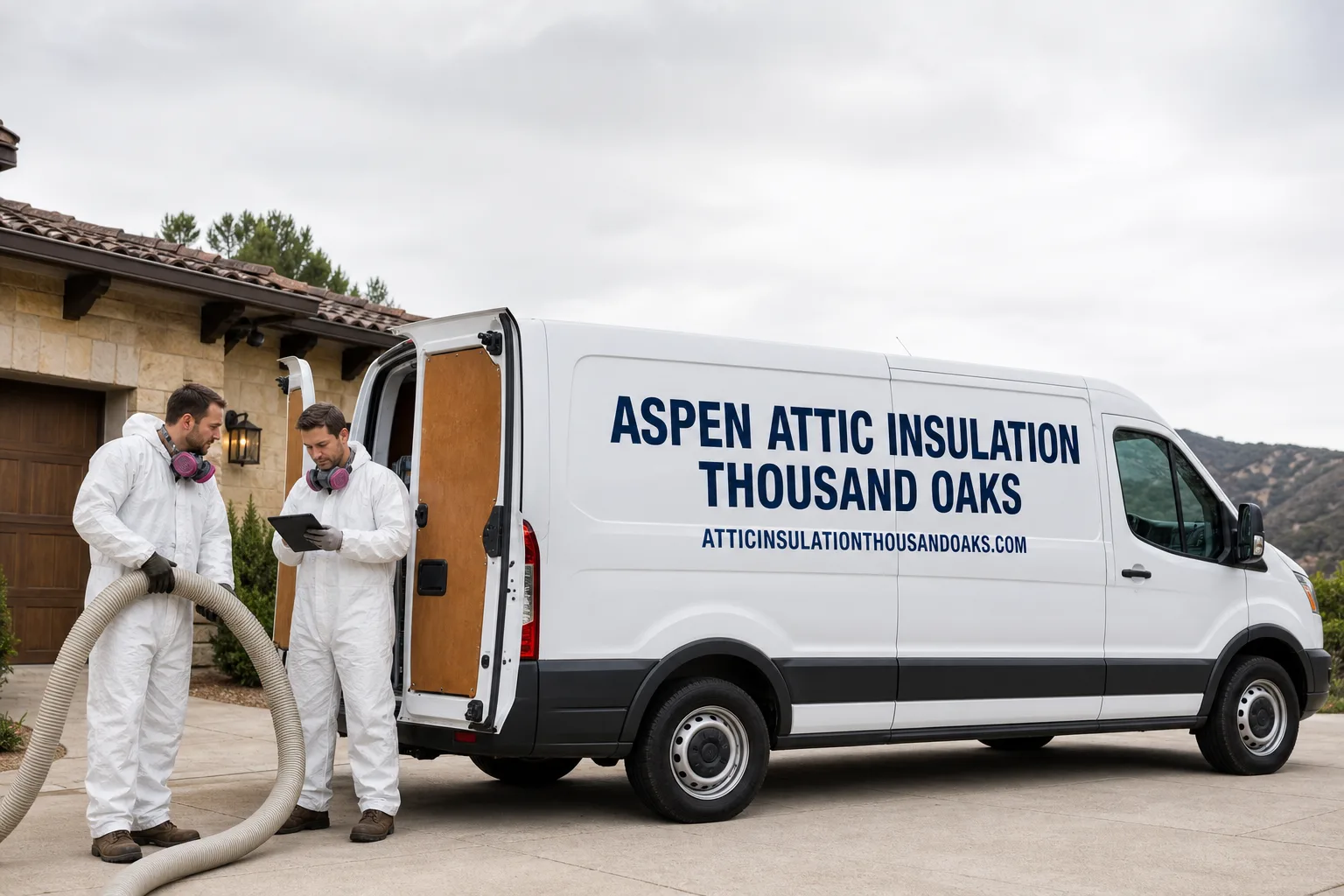
Fast, Reliable Blown In Insulation Across Malibu
Blown In Insulation in Malibu isn’t a one-size-fits-all job. It’s a fire-hardening decision, a moisture-management decision, and a comfort decision rolled into one. Most Malibu homeowners we talk to are dealing with two things at once: an older home that leaks conditioned air, and a newer set of WUI (Wildland-Urban Interface) code requirements that changed the rules for what can legally go into an attic or wall cavity. Our crews work in Malibu weekly, from Point Dume to Las Flores Canyon, and we stock the materials that meet both the energy goals and the county’s wildfire checklist. If you need a written price before any work starts, call us at (805) 309-1610.
Why Aspen Attic Insulation Thousand Oaks Is Malibu’s Preferred Blown In Insulation Company
Malibu homeowners call us because they’ve heard the same story from neighbors: the crew that shows up late, the quote that doubles after the walls are open, the insulation that sags within three years of salt-fog exposure. We run a different operation. Every technician we send to a Malibu home is background-checked, identity-verified, and sent to you by name and photo before the visit. You’ll see a marked uniform and a photo ID badge at the door, every time. Garrett Sloane set that standard when he founded the company in 2002 with the Threshold Group family, and it hasn’t softened since.
What does that mean in practice for a Malibu job? You get a written price before we touch anything. You get our 365-Day Done Right Promise in writing, covering labor and materials for a full year, with a free second visit if a repair fails. And you get a live person on the phone 24/7, not a voicemail loop. We answer calls at (805) 309-1610 and coordinate Malibu scheduling directly from our Los Angeles office.
Blown In Cellulose Insulation in Malibu
Blown In Cellulose Insulation in Malibu is a product we reach for selectively, and for good reason. Cellulose is dense, quiet, and does an excellent job filling irregular cavities in older homes, but it’s also combustible unless treated with fire retardants, and Malibu’s WUI overlay has made untreated or older cellulose a liability in many attics. A typical blown-in cellulose job in Malibu runs $1.50 to $3.00 per square foot installed, depending on depth and access. For homes in the flatter areas of central Malibu, away from the steep canyon faces, cellulose remains a cost-effective option for attics that we can fully air-seal first.
Salt-Air Degradation of Cellulose
Salt-laden marine fog does not spare cellulose. Over eight to ten years near beachfront homes along Malibu Road or Broad Beach, moisture condenses inside the loose fibers, clumping them and cutting the effective R-value by as much as half. We’ve pulled out cellulose that looked like damp newspaper and tested at R-13 when the homeowner paid for R-30. If your home sits within a quarter mile of the water, we’ll talk you through whether cellulose is the right call at all, or whether a fiberglass or mineral wool alternative makes better sense.
Air Sealing Before Insulation
Cellulose only works as well as the cavity it fills. In Malibu homes with 1950s and 1960s construction, the rim joists, can lights, and plumbing penetrations are usually wide open to the outside. We air-seal those gaps before installing anything. Without that step, Santa Ana wind pushes right through the insulation and carries embers into places you do not want them.
Blown In Fiberglass Insulation in Malibu
Blown In Fiberglass Insulation in Malibu is our most common recommendation for attic retrofits, especially in the larger custom homes along the hillside streets off Kanan Dume Road. Loose-fill fiberglass resists the salt-air clumping problem better than cellulose, though it is not immune to it. A typical blown-in fiberglass attic job in Malibu runs $1.75 to $3.50 per square foot installed. For homes inside the WUI overlay, we often pair fiberglass with a mineral wool fire-resistant layer on the exterior-facing assemblies, which adds roughly $1.00 to $1.50 per square foot but satisfies the county’s wildfire hardening checklist.
Dense-Packing for Wall Cavities
Older Malibu beach cottages, the ones built as modest weekend places in the 1960s and never updated, frequently have zero insulation in the exterior walls. None. We dense-pack Owens Corning blown-in fiberglass into those 2×4 cavities to R-15, which is about the best those narrow stud bays will hold. It changes how the house feels within a day, especially on the canyon side where the evening marine layer sits until ten in the morning.
R-Value for Malibu’s Climate Zone
California’s Title 24 energy code puts most of Malibu in climate zone 6, which calls for R-38 in attic floors for new construction and full remodels. Existing homes get some latitude, but if you’re adding blown-in fiberglass, we’ll size it to at least R-38 where joist depth allows. That’s the number that keeps the upstairs from turning into a sauna during a September heat wave and keeps heating bills sane when the winter marine layer settles in.
Trusted Brands We Service in Malibu
We stock and install blown-in insulation from Owens Corning, Johns Manville, Knauf, and Rockwool, and we match the material to the condition on site rather than pushing whatever is on the truck. For a Malibu attic exposed to salt fog, we’d rather install a Johns Manville loose-fill fiberglass with a proven moisture-resistance record than gamble on a cheaper product. For WUI-facing walls, Rockwool’s mineral wool is the name most local building inspectors want to see on the spec sheet. We keep local stock for Malibu jobs so we are not waiting on a distributor when your uninsulated attic is losing cooled air by the hour.
Common Blown In Insulation Problems We See in Malibu Homes
- Salt-fog collapse in beachfront builds: Marine-layer condensation settles into loose-fill insulation and breaks down its loft, cutting R-value by half within a decade. We’ve measured the difference with a thermal camera, and the cold strips in the ceiling line up exactly with where the fog air penetrates.
- Ember entry through unsealed soffit vents: Santa Ana winds push embers into attic cavities through old, unsealed vents, and cellulose insulation in those cavities gives the embers something to burn. Malibu’s WUI overlay now prohibits this setup in many rebuilds.
- Perforated 1960s vapor barriers: When retrofit crews blow insulation into old beach cottages without replacing the original galvanized vapor barriers, the barriers tear, trap moisture, and feed mold inside the wall cavity. This is a live-and-learn situation in Point Dume and the Las Flores canyon area, and it’s one of the first things we check.
- PCH traffic noise in custom homes: Homes along the Pacific Coast Highway corridor get a constant low-frequency rumble that loose-fill insulation alone cannot stop. We’ve found that dense-packed fiberglass in the walls closest to the road, paired with an air-seal on the window and door frames, makes a measurable difference.
Pricing for Blown In Insulation in Malibu, CA
You’ll get a written price before any work starts, always. A standard attic retrofit with blown-in fiberglass in a 1,500 to 2,500 square foot Malibu home typically runs $2,600 to $7,500. Blown-in cellulose lands a bit lower, around $2,250 to $6,000 for the same square footage, but the salt-air risk and WUI requirements mean we won’t recommend it for every home. Wall dense-packing runs $2.00 to $4.00 per square foot of wall area. Adding a Rockwool fire-resistant layer for WUI compliance adds $1.00 to $1.50 per square foot. The biggest cost drivers in Malibu are access (steep driveways and tight attic hatches on hillside decks), the removal of old degraded insulation, and the air-sealing work that most older homes need first. Every estimate is free, and the number you see on paper is the number on the invoice. Call (805) 309-1610 for a written quote.
We Also Serve Cities Near Malibu
Our crews cover the surrounding area from Malibu through Agoura Hills, Westlake Village, Thousand Oaks, and Calabasas. If you’re in one of those communities and need the same Blown In Insulation expertise, we’ll bring the same written-price, name-and-photo-before-arrival standard to your door.
Serving Malibu, CA - Our Local Coverage Area
We’re based in the Malibu area and know this community well. Use the map below to see our service coverage - if you’re nearby, we can almost certainly help.
FAQs About Blown In Insulation in Malibu
No. In most of Malibu’s WUI overlay, blown-in fiberglass alone does not satisfy the fire-hardening checklist for exterior-facing assemblies. You need a non-combustible layer, typically Rockwool mineral wool, on the WUI-facing side, plus ember-resistant venting. We can advise on whether your specific street falls under those requirements. Call (805) 309-1610 and we’ll check your address against the county map.
Yes, over time. Salt-laden fog condenses inside loose-fill cellulose, clumps the fibers, and cuts the R-value by up to 50% within a decade near beachfront homes. Homes within a quarter mile of the water should generally choose fiberglass or mineral wool instead. We’ll tell you honestly whether cellulose is a mistake for your location, and that’s part of the written estimate.
Because those homes were built with no wall insulation and with galvanized vapor barriers that are now corroded from decades of salt fog. When retrofit crews blow insulation in without replacing those barriers, the barriers tear, moisture gets trapped, and mold follows. At a Point Dume mid-century cottage, our crew found zero insulation and a corroded barrier. We air-sealed the rim joists, dense-packed Owens Corning blown-in fiberglass to R-15, and finished with a Rockwool Comfortbatt layer on the WUI-facing side.
Blown-in insulation reduces noise transfer but won’t eliminate low-frequency PCH rumble on its own. Dense-packed fiberglass in the walls facing the road makes a real difference, and pairing it with air-sealing around windows and doors does more. If noise is your main goal, we’ll size the install for acoustic performance as well as thermal performance. Call (805) 309-1610 for specifics on your home.
Poorly installed insulation handles moisture swings badly. The marine layer pushes damp air into wall cavities at night, and Santa Ana winds push it out again, which dries some areas and saturates others. The fix is air-sealing first, then installing insulation that resists clumping, and in WUI areas, a non-combustible layer that also acts as a moisture buffer. That sequence is standard on every Malibu job we do, and it’s covered by our 365-Day Done Right Promise in writing.
If you want a written price from a crew that shows up with a name, a photo badge, and a marked uniform, call Garrett Sloane’s team at (805) 309-1610 today. Estimates are free, and the price won’t change after we start.
Written by Garrett Sloane, Owner at Aspen Attic Insulation Thousand Oaks, serving Malibu since 2002.