
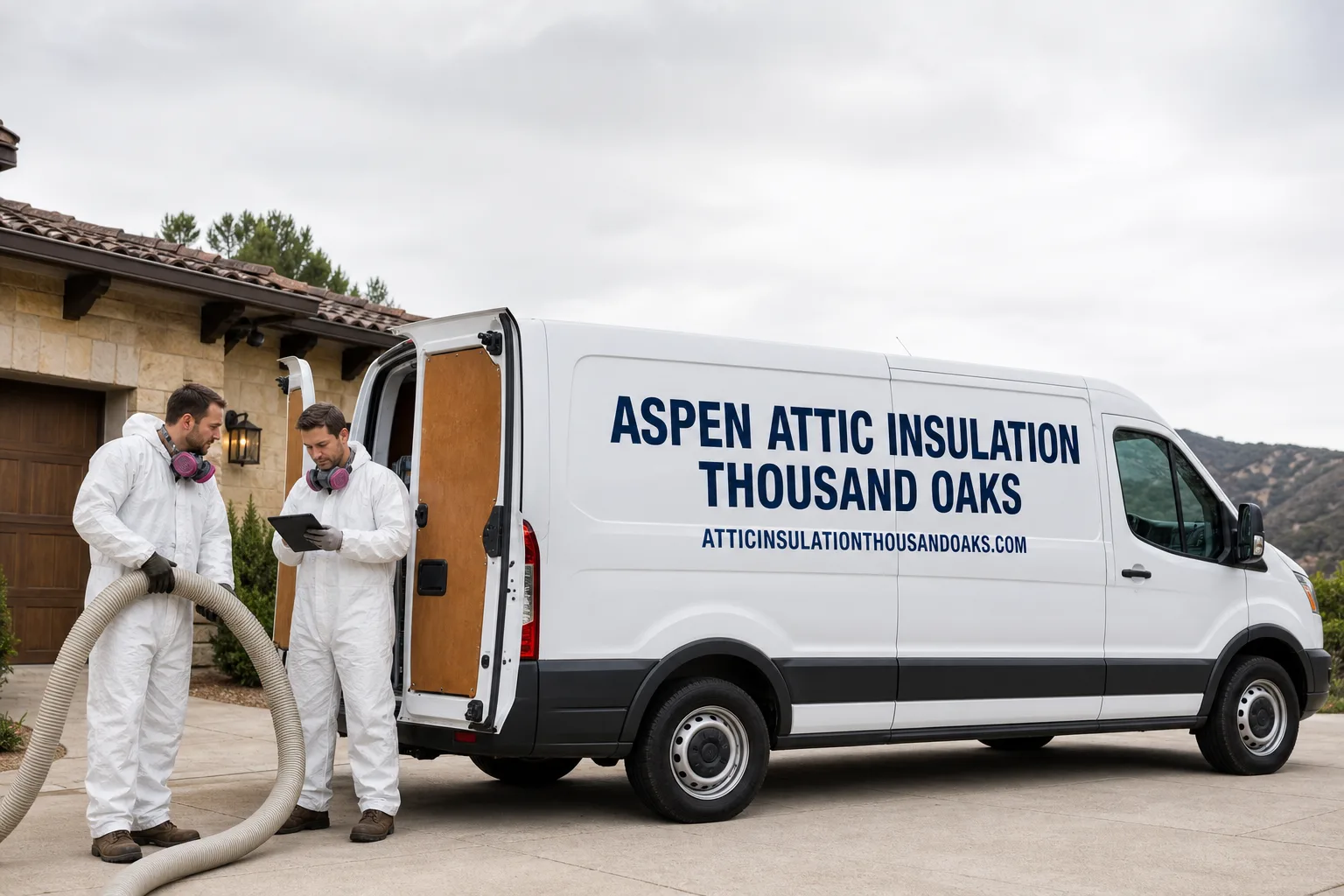
Fast, Reliable Blown In Insulation Across Topanga
Blown in insulation in Topanga typically runs $2,400 – $6,800 for a full attic, depending on square footage, access, and whether we’re removing old material first. Most jobs take one day once the crew is on site. We know Topanga’s canyon roads, the steep driveways on Saddle Peak and Old Topanga Canyon Road, and the older post-and-beam homes that need a different approach than a 1990s tract house in the Valley. That local knowledge means the crew arrives prepared, the quote is accurate before we start, and you’re not surprised by anything. Call (805) 309-1610 for a free estimate.
Why Aspen Attic Insulation Thousand Oaks Is Topanga’s Preferred Blown In Insulation Company
Topanga homeowners call us because we do two things most insulation companies won’t. We put the technician’s name and photo in your hands before anyone shows up. And we put the price in writing before any work begins. Garrett Sloane founded this company in 2002, and from day one the rule has been simple: the person coming to your door is background-checked, identity-verified, in a marked uniform, and holding a photo ID badge. You know who you’re opening the door to.
A live person answers our phones 24/7. Not a voicemail loop. When you call about blown in insulation in Topanga, you talk to someone who can schedule the visit and answer questions about cellulose versus fiberglass, rodent issues, or fire-hardening specs. Our crews serving the Topanga area coordinate dispatch from the brand’s Los Angeles office and arrive with materials matched to the job, not whatever happens to be on the truck.
Every job is covered by the 365-Day Done Right Promise. That means the work is guaranteed in writing for a full year, covering labor and materials. If something fails, we come back and make it right, free. That’s not a verbal promise. It’s in writing on every single job.
Blown In Cellulose Insulation in Topanga
Blown In Cellulose Insulation is the most common material we install in Topanga because it dense-packs well into post-and-beam joist bays and irregular attic cavities that fiberglass batts never fit correctly. Cellulose is made from recycled paper fiber treated with borates. It reduces air movement better than loose-fill fiberglass, which matters in Topanga when Santa Ana winds push through open rafter tails and gaps in wood siding. A typical blown in cellulose attic in Topanga runs $2,800 – $6,200 for removal of old material and new installation, depending on square footage and how much air sealing is needed first.
Dense-Pack Cellulose for Canyon Homes
Topanga’s older homes, especially the 1920s – 1980s post-and-beam builds, have cavities that are shallow or irregular. Dense-packing cellulose into those bays stops air movement and cuts the wind-driven heat loss that plagues hillside homes. We dense-pack at higher pressure so the material locks into place and won’t settle out of steep ceiling slopes the way loose-fill can.
Pest-Resistant Cellulose Treated with Borates
Rodents are a real problem in Topanga attics. Borate-treated cellulose deters insects and pests, which is why we recommend it for homes near open canyon land. We pair it with intrusion sealing, closing eave gaps and crawl space entry points before new insulation goes in. Otherwise you’re just putting fresh material on top of an open highway.
Blown In Fiberglass Insulation in Topanga
Blown In Fiberglass Insulation is a strong choice for Topanga homeowners who want a non-cellulose option, particularly in attics with consistent depth and straightforward access. Loose-fill fiberglass is made from spun glass fibers, is naturally non-combustible, and won’t absorb moisture the way cellulose can. In Topanga’s dry summers and damp winters, that moisture resistance matters in attics with limited ventilation. A blown in fiberglass job in Topanga typically costs $2,400 – $5,800 for a full attic, including removal of old material where needed.
Non-Combustible Loose-Fill for Wildfire Zones
Fiberglass doesn’t burn. For Topanga homes in high wildfire severity zones, every material decision matters. We use fiberglass from Owens Corning or Johns Manville when the homeowner wants a non-combustible option that still delivers solid thermal performance. The material won’t sag on flat attic floors and holds its R-value over time when installed to the specified depth.
Open-Blow Fiberglass for Retrofits
When the attic access is tight or the roof pitch is low, open-blow fiberglass works well. We run the hose through the access point and fill the attic floor to the manufacturer’s recommended depth for your climate zone. For Topanga homes, that usually means R-38 to R-49, achieved at roughly 12 to 15 inches of loose-fill.
Trusted Brands We Service in Topanga
We stock materials from eight industry-leading brands, including Owens Corning, Johns Manville, and GreenFiber. That means we’re not locked into one manufacturer’s product line. If your Topanga home needs a pest-resistant cellulose for a rodent problem, we use GreenFiber’s borate-treated product. If the wildfire risk pushes you toward a non-combustible option, we pull Owens Corning or Johns Manville loose-fill fiberglass. The decision is driven by your house, your attic, and your priorities, not by what a single supplier happened to have in stock that week. Our Blown In Insulation team arrives with the right material on the truck the first time.
Common Blown In Insulation Problems We See in Topanga Homes
- Steep-slope settling: Loose-fill insulation settles unevenly on steep ceiling slopes, leaving cold spots right where Santa Ana winds drive heat loss through post-and-beam joist bays. We see this constantly in Topanga homes where a previous contractor underestimated the slope factor.
- Moisture condensation in cellulose: Topanga’s damp winter air condenses inside dense-packed cellulose when attic ventilation isn’t upgraded at the same time. The result is mold forming on the underside of custom wood ceilings, which is a costly fix.
- Rodent re-entry after installation: Rodents chew straight through freshly blown insulation unless the entry points are sealed first. We routinely find crawl space access gaps and open eave joints that need pest-resistant foam and hardware cloth before any new material goes in.
- Uninsulated attic floors with no air sealing: Many Topanga homes built between the 1920s and 1980s have attic floors with zero insulation and no air sealing at the joist bays. Blowing insulation over an unsealed attic floor is like putting a sweater over a screen door. We air-seal first, then insulate.
Pricing for Blown In Insulation in Topanga, CA
For a full attic in Topanga, blown in insulation runs $2,400 to $6,800 installed. That includes removal of old or rodent-damaged material when needed, air sealing at the joist bays, and the new insulation blown to the correct depth for this climate zone. Smaller jobs, like topping up a low spot or adding R-value to a single room’s attic section, start around $900 – $1,400. What moves the number: access difficulty on steep lots, the amount of old material we’re hauling out, and whether we’re doing intrusion sealing for rodents or fire-hardening at eave gaps. You get the written price before any work starts, always. Call (805) 309-1610 for a free estimate specific to your house.
We Also Serve Cities Near Topanga
Our crews work throughout the western canyon communities, including Calabasas, Canoga Park, West Hills, and Agoura Hills. If you’re in a neighboring community and need Blown In Insulation in Topanga expertise applied to your own attic, we can help. The terrain, housing stock, and rodent pressure don’t stop at the Topanga line, and neither do we.
Serving Topanga, CA - Our Local Coverage Area
We’re based in the Topanga area and know this community well. Use the map below to see our service coverage - if you’re nearby, we can almost certainly help.
FAQs About Blown In Insulation in Topanga
Blown-in insulation outperforms batts in Topanga because it fills irregular post-and-beam cavities completely, leaving no gaps for embers to find. Fiberglass batts leave seams and voids at joist bays, and on a steep canyon wall those become air channels. For fire-hardening, we pair any blown-in material with non-combustible intrusion sealing at eave gaps and rafter tails. Call (805) 309-1610 to talk through your specific attic.
Only if the entry points are sealed first. Blown-in insulation by itself won’t stop rodents; they’ll tunnel straight through it. We seal crawl space access gaps, eave openings, and any penetration where pipes or wires enter the attic, then install borate-treated cellulose or fiberglass. That combination stops both the highway and the highway noise.
Yes. We dense-pack cellulose into the joist bays from above, through access points in the attic floor or roof deck. The work happens above the exposed wood ceiling, not through it. We cut no holes in the living space and no finish work is required afterward. The exposed beams stay exactly as they are.
Both cellulose and fiberglass work, but the choice depends on ventilation. In a properly ventilated attic, dense-packed cellulose handles Topanga’s temperature swings well and reduces air movement better than loose fiberglass. In a poorly ventilated attic where moisture is a concern, we recommend non-combustible fiberglass from Owens Corning or Johns Manville, plus ventilation upgrades. We’ll tell you honestly which one fits your attic after we look at it.
They affect logistics, not price. Our crews drive trucks and equipment designed for tight access on roads like Old Topanga Canyon and Saddle Peak. We may need to schedule a smaller vehicle or stage material at the base of a driveway for very steep lots, but we plan for that after the initial visit. You don’t get charged extra for a tricky driveway. Call (805) 309-1610 and we’ll come take a look.
Topanga’s Wildfire Ember Trap: What Makes Insulation Here Different
Topanga’s post-and-beam homes from the 1920s through the 1980s often have open rafter tails and uninsulated crawl spaces that become wildfire ember traps. This isn’t a problem you’d find in a newer canyon community like Calabasas, where the framing is standard and the eaves are closed. When embers lodge into open rafter tails or an unsealed crawl space, the insulation we install needs to work alongside fire-resistant intrusion sealing. That means non-combustible materials at the eave gaps, pest-resistant mesh at crawl space openings, and blown-in insulation that fills the joist bays completely. This is a spec we’ve developed for Topanga specifically. It is not a generic spec, and it rarely applies in flatter, newer communities. If you own a Topanga home, this is the standard your insulation job should meet.
On a hillside home off Old Topanga Canyon Road, our crew removed rodent-chewed fiberglass batts from an uninsulated attic and dense-packed blown-in cellulose with Owens Corning’s pest-resistant treatment, then air-sealed the post-and-beam joist bays to stop the Santa Ana wind from whistling through the custom wood siding. That’s the kind of work Topanga attics actually need. The previous insulation had been shredded by rodents for years, and the homeowner had been paying to heat and cool open air. After the job, the attic was sealed, insulated, and ready for the next Santa Ana event. That’s what we mean when we say we do the job for the house, not just to the house.
Key Takeaways: Blown In Insulation in Topanga
- Full attic blown in insulation in Topanga runs $2,400 – $6,800, written in advance.
- Topanga’s post-and-beam homes need air sealing and fire-resistant intrusion sealing done alongside the insulation, not after.
- Rodent pressure in Topanga is real: entry sealing comes first, insulation second.
- Cellulose dense-packs better into irregular joist bays; fiberglass is the non-combustible choice for wildfire zones.
- The 365-Day Done Right Promise covers labor and materials in writing for a full year.
- Every technician is background-checked, identity-verified, and sent to you by name and photo before the visit.
Get Your Free Blown In Insulation Estimate in Topanga
If your Topanga attic is under-insulated, rodent-damaged, or leaking air through post-and-beam joist bays, call us at (805) 309-1610. We’ll schedule a visit, send you the technician’s name and photo before you open the door, and put your price in writing before any work begins. A live person answers the phone, 24/7. No pressure, no countdown, no surprises. Just an honest assessment and a written quote from a company that has been doing this since 2002.
Written by Garrett Sloane, Owner at Aspen Attic Insulation Thousand Oaks, serving Topanga and the surrounding canyon communities since 2002.