
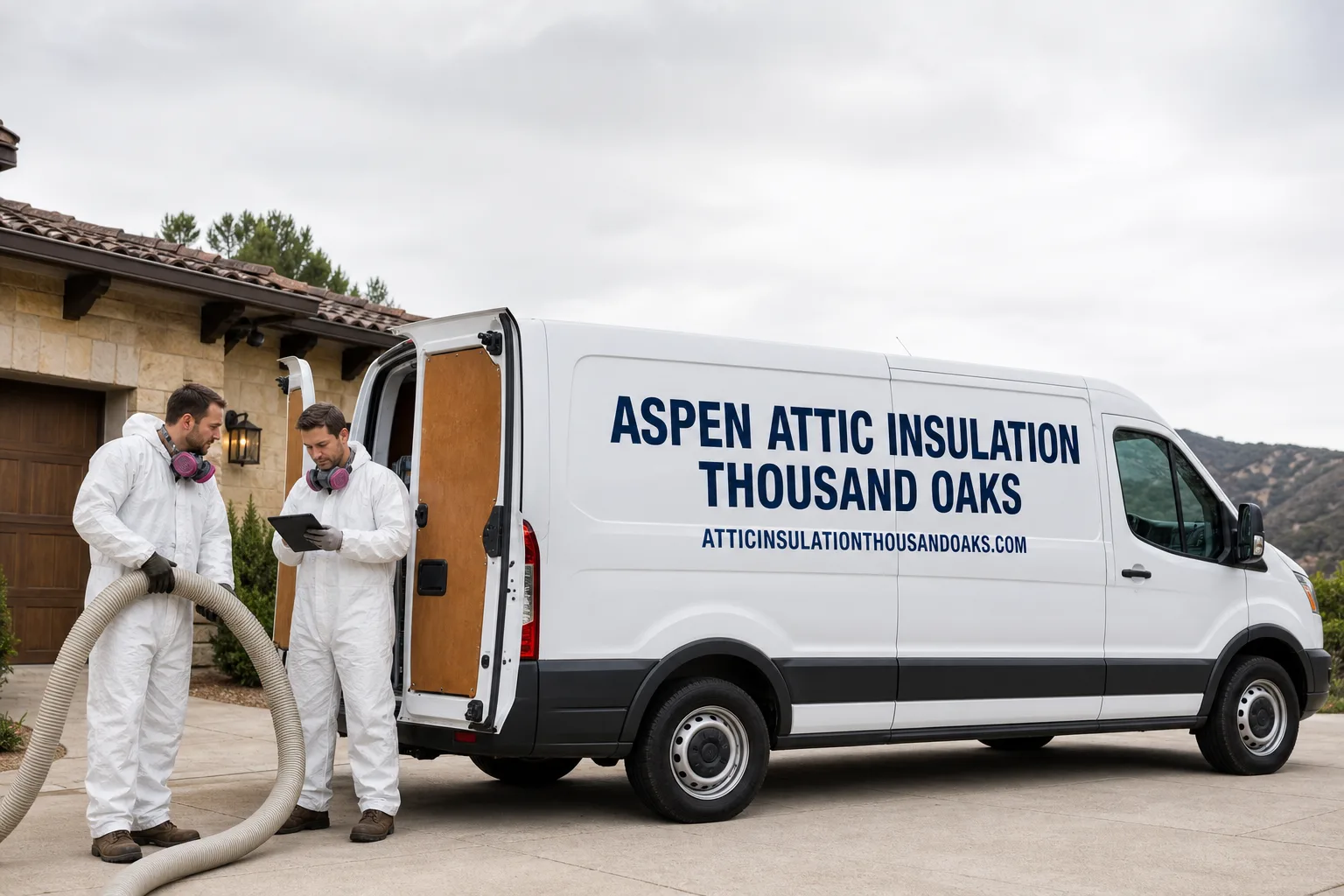
Fast, Reliable Blown In Insulation Across Calabasas
Blown-in insulation in Calabasas typically costs $2,200 to $6,800 for a full attic upgrade, depending on square footage and whether we’re removing old material first. Most Calabasas jobs finish in one day. We dispatch crews from our Los Angeles office to Calabasas neighborhoods like The Oaks, Mountain View Estates, and Calabasas Hills every week, so scheduling is straightforward and we can usually be at your door within 48 hours.
Calabasas homes present a specific challenge: sprawling hillside estates built in the 1980s through 2000s with complex rooflines, vaulted ceilings, and attics that were never properly air-sealed. The original fiberglass batts in these homes have spent decades baking in 100-degree summers and are now compressed, rodent-damaged, or both. Blown-in insulation fixes that by filling every cavity completely. Call (805) 309-1610 for a written estimate before any work begins.
Why Aspen Attic Insulation Thousand Oaks Is Calabasas’s Preferred Blown In Insulation Company
Calabasas homeowners call us for one reason more than any other: they know exactly who is walking through the door. Every technician we send into Calabasas is background-checked, identity-verified, and arrives in a clean marked uniform with a photo ID badge. We send the tech’s name and photo to your phone before the visit. If anyone else shows up, the visit is free and we make it right. That’s the Threshold Standard, and it applies to every job in Calabasas, no exceptions.
We work throughout Calabasas regularly enough to know the difference between a 1988 Mediterranean off Mulholland Highway and a 2004 Spanish-style estate above Las Virgenes Road. That matters when you’re pricing a job, because older attics in Calabasas often need old material removed, air-sealing, and ember-resistant vent screens before new insulation goes in. A company that only knows how to blow fiberglass will miss those steps.
Every Calabasas job carries a written price delivered before work starts, and a 365-Day Done Right Promise covering labor and materials for a full year. If a repair fails, the second visit is free. Garrett Sloane built Aspen Attic Insulation around that guarantee, and it’s why Calabasas homeowners keep our number.
Blown In Fiberglass Insulation in Calabasas
Blown In Fiberglass Insulation is the workhorse upgrade for Calabasas attics, and we install it in homes from The Oaks to Calabasas Park. Loose fiberglass fibers are blown through a hose into the attic cavity, filling gaps, settling around trusses, and creating a continuous thermal blanket that stops heat from radiating into living spaces. For a typical 2,000-square-foot Calabasas home, blown-in fiberglass installation runs $2,200 to $4,500 depending on depth and whether old insulation needs removal first.
Fiberglass Over Vaulted Ceilings
Vaulted ceilings in Calabasas’s 1980s and 1990s custom homes are notorious for under-insulated cavities. The original builders often left R-19 or less in those angled spaces, which means the ceiling surface heats up like a radiator every summer afternoon. Blown fiberglass dense-packed into those cavities brings them to R-38 or higher without tearing out drywall. We do this in Calabasas regularly, and homeowners feel the difference within a day.
Replacing Compressed Batts in Older Calabasas Attics
Original fiberglass batts in Calabasas attics sag and compress after 20 to 40 years of heat cycling. Once compressed, R-30 batts might be performing at R-19 or worse. We remove the old material, air-seal the top plates and can lights, then blow in fresh fiberglass to the depth Title 24 requires. That removal and replacement approach in Calabasas typically runs $3,800 to $6,800 for a full attic.
Loose Fill Insulation in Calabasas
Loose Fill Insulation in Calabasas usually means cellulose, and it’s the option we recommend most often for hillside estates where rodents have shredded the existing fiberglass. Loose fill is exactly what it sounds like: loose fibers blown into the attic cavity to fill every gap, void, and corner. We install GreenFiber cellulose or fiberglass loose fill depending on the home, and Calabasas pricing lands between $2,400 and $5,900 for a complete attic, including removal of old material when needed.
Cellulose for Fire-Zone and Rodent-Prone Attics
Calabasas sits in a wildfire-risk corridor, and that changes the insulation conversation. GreenFiber cellulose is treated with fire retardants, which gives it a real advantage over untreated fiberglass when embers find their way into attic spaces during Santa Ana wind events. We’re not saying cellulose is fireproof. But in a city where brush fires can send firebrands over a mile, using fire-retardant-treated loose fill is a defensible choice.
Dense-Packing Existing Cavities
For Calabasas homes with finished attic spaces or complex rooflines, dense-packing loose fill into existing wall and ceiling cavities delivers an air-sealing effect that standard blown fiberglass can’t match. The material packs tightly enough to reduce air movement through the cavity, which helps with both heat gain and ember entry. This is common work for us in The Oaks and Mountain View Estates, where gated-home attics often hide gaps around vents and can lights that nobody has looked at since construction.
Trusted Brands We Service in Calabasas
We stock and install insulation from Owens Corning, Johns Manville, Knauf, and GreenFiber, so Calabasas homeowners get the right material for their specific attic, not whatever happens to be on the truck. GreenFiber cellulose is our go-to for wildfire-zone replacement work in Calabasas because of its fire-retardant treatment and pest-deterrent properties. Owens Corning and Johns Manville fiberglass give us options for attics that need vapor-permeable coverage, and Knauf rounds out our loose fill inventory. We keep these materials available for Calabasas jobs specifically because we know the housing stock and what those attics require.
Common Blown In Insulation Problems We See in Calabasas Homes
- Compressed and under-performing original batts. Homes built in the 1980s through 2000s across Calabasas usually have fiberglass batts that have sagged and compressed over decades of 100-degree summer heat cycles. Many are performing far below their labeled R-value and failing current Title 24 minimums.
- Rodent damage in hillside estates. Rats and mice are a constant in the brush-adjacent hillsides above Las Virgenes Road and Mulholland Highway. They tunnel through fiberglass, leaving urine-soaked insulation that off-gasses into living spaces when attic temperatures climb past 140°F in August.
- Ember entry through unsealed vents and can lights. During Santa Ana wind events, firebrands can travel over a mile and enter attics through unscreened vents and unsealed can light housings. If the insulation in that attic lacks fire-retardant treatment, the result can be catastrophic.
- Vaulted ceiling hot spots. The vaulted and cathedral ceilings common in Calabasas’s Mediterranean and Spanish-style homes often hide cavities insulated to R-19 or less. Homeowners feel those hot spots every summer afternoon and don’t know the cause until we inspect.
Pricing for Blown In Insulation in Calabasas, CA
Here’s what Calabasas homeowners should budget. A straightforward blown-in fiberglass install in an open attic runs $2,200 to $4,500. If we’re removing old fiberglass batts first, expect $3,800 to $6,800. Loose fill cellulose with air-sealing and ember-resistant vent screens lands between $2,400 and $5,900. Rodent remediation, which includes full removal, sanitizing, and dense-packing, starts around $4,200 and can reach $7,500 on larger hillside estates. Every Calabasas quote is written and delivered before work starts, and the 365-Day Done Right Promise covers the full job, labor and materials, for a year. Call (805) 309-1610 for a free estimate and a specific number for your home.
We Also Serve Cities Near Calabasas
Our crews work throughout the west San Fernando Valley and Santa Monica Mountains, including Blown In Insulation in Calabasas and the surrounding communities of West Hills, Topanga, Canoga Park, and Agoura Hills. If you’re in one of those areas, the same crew protocols, written pricing, and 365-Day Done Right Promise apply.
Serving Calabasas, CA - Our Local Coverage Area
We’re based in the Calabasas area and know this community well. Use the map below to see our service coverage - if you’re nearby, we can almost certainly help.
FAQs About Blown In Insulation in Calabasas
Yes, but insulation alone is not enough. We recommend fire-retardant-treated cellulose, like GreenFiber, combined with ember-resistant vent screens and air-sealing around can lights and top plates. In Calabasas, where Santa Ana winds can carry firebrands over a mile from brush fires, the combination of treated loose fill and sealed entry points is what actually reduces ember risk. We include this in every wildfire-zone quote. Call (805) 309-1610 to have your attic vents inspected.
Current Title 24 energy standards call for R-38 in attic spaces for most Calabasas homes, though R-49 is recommended for attics with little existing coverage. Many of Calabasas’s 1980s and 1990s homes were built to R-19 or R-30 standards and no longer pass. We measure your existing coverage during the free estimate and tell you exactly what depth of blown-in insulation gets you compliant. Written price included before work starts.
We remove the damaged material completely, sanitize the attic space, air-seal rodent entry points, and then blow in new insulation. In The Oaks and Mountain View Estates, we find rodent-damaged attics regularly because the brush-adjacent lots attract rats and mice. Leaving urine-soaked fiberglass in place is not an option we’ll entertain. Get a full quote by calling (805) 309-1610.
Yes. We dense-pack blown-in fiberglass or cellulose into vaulted ceiling cavities through small access holes, bringing those spaces from R-19 to R-38 or higher without removing drywall. This works particularly well in Calabasas’s Mediterranean and Spanish-style homes, where vaulted ceilings are common and tear-out would be prohibitively expensive. The holes are sealed and patched before we leave.
Yes, and the difference is measurable. In one Mountain View Estates home, we replaced compressed R-19 fiberglass with dense-packed R-38 cellulose in the vaulted cavities and the homeowner’s August cooling bill dropped by about a third. Calabasas summers regularly exceed 100°F, so stopping radiant heat gain at the attic level is the single biggest lever you can pull on cooling costs. Call (805) 309-1610 for a free estimate and we’ll tell you honestly whether your attic is the problem.
Written by Garrett Sloane, Owner at Aspen Attic Insulation Thousand Oaks, serving Calabasas with Blown In Insulation since 2002.