
Fast, Reliable Attic Insulation Across Canoga Park
Attic insulation in Canoga Park typically costs between $1,400 and $3,800 for a standard single-family home, with blown-in cellulose or fiberglass running $1.10 to $2.40 per square foot installed. Most jobs are completed in a single day, and we answer the phone 24/7 at (805) 309-1610. If your home was built between 1950 and 1975, there’s a good chance you’re sitting under R-11 fiberglass or, worse, compacted rock wool that stopped doing its job years ago.
We know Canoga Park attics because we’ve been inside hundreds of them. From the Avenues up to the hills off Topanga Canyon Boulevard, the story is usually the same: original insulation that’s settled, compressed, and leaking conditioned air straight through the ceiling. Our crews serve Canoga Park daily, and we’ll send you the technician’s name and photo before anyone knocks on your door. That’s the Threshold Standard, and it’s non-negotiable.
Why Aspen Attic Insulation Thousand Oaks Is Canoga Park’s Preferred Attic Insulation Company
Since 2002, we’ve built our reputation on doing exactly what we say we’ll do. Homeowners in Canoga Park call us because they’re tired of estimates that balloon after the work starts. We put the price in writing before any material leaves our truck. That price covers labor, materials, cleanup, and disposal. If it’s not done right, our 365-Day Done Right Promise means we return and fix it at no charge. That guarantee is in writing, on every job, no exceptions.
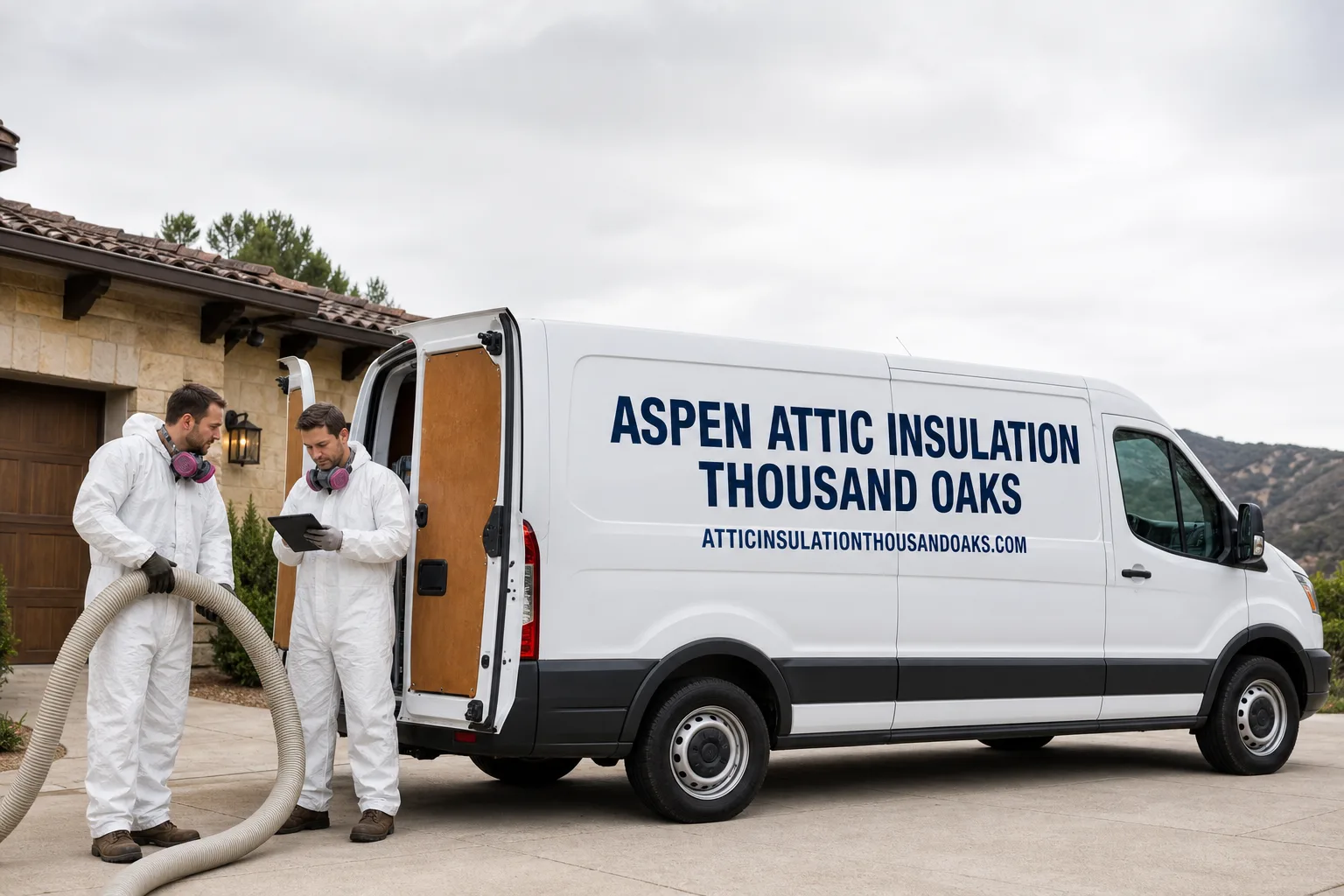
Garrett Sloane and his team understand what it means to let a stranger into your home. Every technician we send to Canoga Park is background-checked, identity-verified, and arrives in a clean marked uniform with a photo ID badge. You’ll receive the tech’s name and photo before the visit. If anyone else shows up, that visit is free and we make it right. We don’t send subcontractors, and we don’t hide behind voicemail. A live person answers when you call, even at 2 a.m.
Our response time to Canoga Park neighborhoods is typically same-day or next-day for estimates, and we keep materials from eight premium brands on hand: Owens Corning, Johns Manville, Knauf, Rockwool, CertainTeed, Icynene, Demilec, and GreenFiber. That means the right product goes in, not just whatever is left in the warehouse.
Attic Ventilation in Canoga Park
Attic ventilation in Canoga Park is not optional. It’s the difference between an attic that stays at 115°F and one that bakes at 140°F all August. Many mid-century homes here still rely on original static roof louvers, and we routinely find them painted over during stucco re-coats. When that happens, superheated air gets trapped, shingles curl, and your insulation loses its loft. A proper vented attic protects both your insulation investment and your roof deck.
Signs Your Ventilation Has Failed
If your upstairs rooms stay hot long after the sun goes down, or if you see condensation on the underside of your roof sheathing in winter, your attic isn’t breathing. We also look for rusted nails poking through the deck, which means moisture is trapped. In Canoga Park’s hot-semi-arid climate, ventilation failures accelerate insulation degradation fast.
What Ventilation Work Costs Here
Adding or repairing attic ventilation in Canoga Park runs $375 to $950, depending on whether we’re cutting in new soffit vents, installing a solar-powered attic fan, or replacing painted-over louvers. Most ventilation upgrades are done in three to five hours. We always assess ventilation before adding insulation, because new insulation in an unvented attic is money wasted.
Radiant Barrier in Canoga Park
Radiant barrier in Canoga Park is one of the highest-return upgrades for homes that see attic temps above 130°F, which is most of them here between June and September. A radiant barrier is a reflective material installed under the rafters that bounces radiant heat back out instead of letting it soak into your insulation. It doesn’t replace insulation; it makes the insulation you already have work dramatically better.
What It Does on a 138°F Day
On a 1963 stucco home off Topanga Canyon Boulevard, our crew measured attic temps at 138°F before installing GreenFiber cellulose and a radiant barrier. Afterward, the homeowner reported the upstairs bedrooms held steady at 76°F with the same AC settings that previously couldn’t keep them below 82°F. That’s the kind of difference we see regularly in this part of the Valley.
Radiant Barrier Cost in Canoga Park
A radiant barrier installation for a typical 1,200 to 1,800 square foot Canoga Park home runs $1,800 to $3,200. The material is stapled to the underside of the roof rafters, not laid on the attic floor, so it stays clean and effective for the life of the roof. Combined with a full insulation top-up, most homeowners recover the cost in two to four years of lower cooling bills.
Trusted Brands We Service in Canoga Park
We work with materials from eight industry-leading manufacturers, and we stock the ones that matter most for Canoga Park’s housing stock. Owens Corning fiberglass batts are a workhorse for standard joist bays in 1950s and 1960s homes. Johns Manville blow-in fiberglass covers irregular cavities well. GreenFiber cellulose is our go-to for top-ups over settled rock wool, because it fills the gaps the old stuff leaves behind. We don’t push whatever is on sale that month. We match the product to your attic’s specific failure mode, and we keep local inventory so Canoga Park jobs aren’t waiting on a shipment.
Common Attic Insulation Problems We See in Canoga Park Homes
- Settled rock wool in Avenues-area homes. Original 1950s rock wool compacts to half its installed depth over time, leaving bare spots above ceilings. Rooms directly under these voids bake unevenly, and energy audits flag them every time.
- Uninsulated recessed can lights acting as thermal chimneys. Mid-century Canoga Park homes are full of these. A single unsealed can light can pull 140°F attic air down into the living room, undoing the work of your insulation.
- Baked-out fiberglass batts in stucco homes. When attic ventilation fails, fiberglass batts slowly lose their loft and turn dark from trapped dust and heat. They still look thick, but they test at a fraction of their original R-value.
- Painted-over static louvers strangling airflow. During stucco re-coats, original roof louvers get sealed shut. The attic becomes a heat trap, shingles curl above, and insulation bakes from the top down.
Pricing for Attic Insulation in Canoga Park, CA
Here’s what we actually charge in Canoga Park, based on the homes we work on every week. A blown-in insulation top-up over existing material runs $1,400 to $2,600 for a 1,200 square foot attic. Full attic insulation replacement, including removal of old rock wool or fiberglass, air sealing, and new material to R-38, runs $2,600 to $3,800. Attic baffles and ventilation prep add $375 to $950. Radiant barrier runs $1,800 to $3,200. Every estimate is free, written, and handed to you before any work starts. Call (805) 309-1610 and we’ll walk your attic with you, show you what’s actually up there, and give you a price that doesn’t change.
We Also Serve Cities Near Canoga Park
Our crews cover Canoga Park and the surrounding West Valley neighborhoods daily. If you’re in West Hills, Chatsworth, Calabasas, or Topanga, the same written-price guarantee and background-checked technician protocol applies. We schedule Canoga Park jobs first each morning, then move outward, so even neighboring cities get same-day or next-day service most weeks.
Serving Canoga Park, CA - Our Local Coverage Area
We’re based in the Canoga Park area and know this community well. Use the map below to see our service coverage - if you’re nearby, we can almost certainly help.
FAQs About Attic Insulation in Canoga Park
Original rock wool looks like gray-brown pebbles or loose fibers, not pink or yellow batts. In the Avenues, it’s usually settled to under six inches, often with bare joists visible. If you see that, your effective R-value is probably R-8 or less. We can verify it with a free attic inspection and tell you exactly what a top-up or replacement would cost. Call (805) 309-1610 and we’ll schedule it.
Yes, for most homes here it is. When attic temps hit 130 to 140°F, a radiant barrier reflects the majority of that heat back out, which keeps your insulation cooler and your upstairs rooms noticeably more comfortable. Homes with west-facing rooflines or poor shade get the biggest returns. Expect to pay $1,800 to $3,200 for a typical install.
Dirty, flattened batts mean your attic has a ventilation problem. The dirt is dust and debris getting pulled through the insulation by air leaks, and the compression comes from heat and moisture breaking down the fiberglass structure. Compressed batts lose most of their R-value. We fix the ventilation first, then replace or top up the batts so the problem doesn’t repeat.
Usually, yes. In a hot-semi-arid climate like Canoga Park’s, trapped attic heat destroys new insulation fast. We inspect your existing vents, roof louvers, and soffit intake before recommending insulation. If your louvers are painted over or you have no soffit vents, we’ll add ventilation first. That work runs $375 to $950 and extends the life of your insulation for decades.
In Canoga Park, the current Title 24 standard for attic insulation is R-38 for most residential projects. That’s roughly 12 to 14 inches of blown-in fiberglass or cellulose, or about 10 to 12 inches of batt insulation. Most homes built before 1975 sit well below that, which is why the retrofits we do here are so heavily focused on topping up legacy rock wool and thin original fiberglass.
Call (805) 309-1610 for a free estimate. We’ll send you the technician’s name and photo before we arrive, hand you a written price before any work starts, and back the job with our 365-Day Done Right Promise. Garrett Sloane and the team at Aspen Attic Insulation Thousand Oaks know what a Canoga Park attic needs. We’d rather show you than tell you.
Written by Garrett Sloane, Owner at Aspen Attic Insulation Thousand Oaks, serving Canoga Park since 2002.