
Fast, Reliable Attic Insulation Across Topanga
Attic insulation in Topanga isn’t a standard job, and anyone who treats it that way is going to cause you problems. Most homes here sit on steep canyon lots with narrow access, custom construction, and attics that rodents have claimed for decades. A typical insulation project in Topanga runs $1,400 – $3,800 depending on square footage, existing material condition, and whether we’re doing a top-up or a full tear-out and replacement. We plan for hand-carrying material up long driveways, matching fire-rated products to your specific roof assembly, and sealing entry points so the next rat doesn’t undo our work. Call (805) 309-1610 and a live person answers, 24 hours a day.
Why Aspen Attic Insulation Thousand Oaks Is Topanga’s Preferred Attic Insulation Company
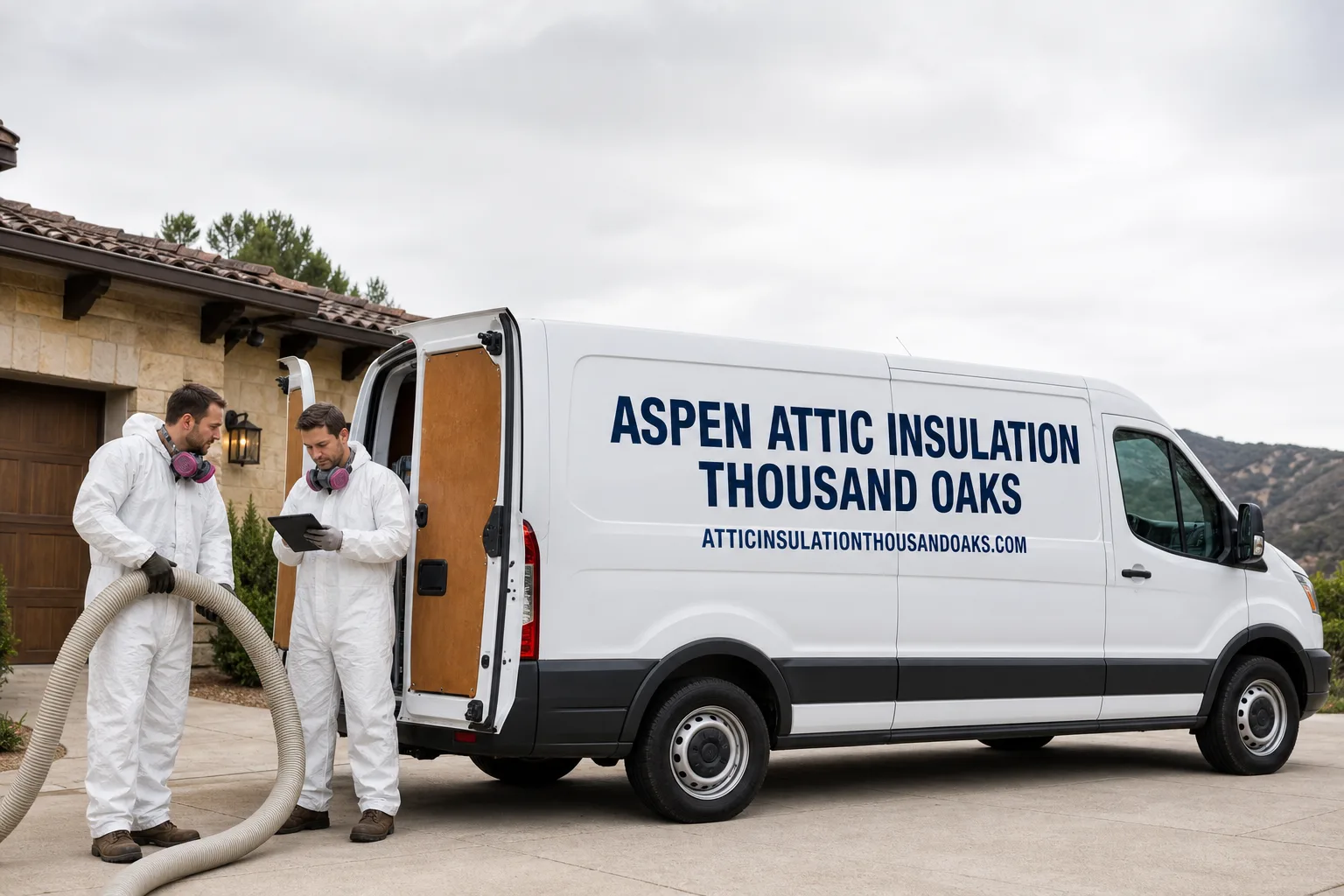
Topanga homeowners have dealt with enough contractors who arrive late, quote vague, and vanish when the first problem shows up. That’s why we put every technician’s name and photo in your hands before they pull onto your road. You’ll see exactly who’s coming: background-checked, identity-verified, in a clean marked uniform, photo ID badge at the door. If anyone else shows up claiming to be us, the visit is free and we make it right. That’s the Threshold Standard, and we’ve held to it since 2002.
Our crews know Topanga’s roads. They know which driveways a box truck can’t climb, which homes need materials staged at the bottom and walked up in bundles, and which stretches of Topanga Canyon Boulevard slow to a crawl on summer weekends. That local knowledge means we show up with the right plan and the right equipment the first time, not after two failed attempts.
Radiant Barrier in Topanga
Radiant barrier in Topanga is one of the most cost-effective upgrades for homes without central air conditioning, which is a lot of them up here. A radiant barrier is a reflective foil material installed under the roof deck that bounces radiant heat back out before it ever reaches your attic floor. On a 95-degree August afternoon in the canyon, an unventilated attic can hit 140 degrees. That heat bleeds down into living spaces all evening. A radiant barrier cuts that attic temperature by roughly 20 – 30 degrees when installed properly. In Topanga, we typically quote $1.25 – $2.25 per square foot for radiant barrier installation, depending on your roof pitch and access.
How We Install It on Hillside Roofs
Steep-pitched roofs common in Topanga’s custom homes make radiant barrier installation slower and more physically demanding than on a flat suburban tract house. Our crews work from the attic side, stapling the foil to the underside of the rafters, leaving a small air gap that’s essential for the reflective surface to actually work. On post-and-beam homes with exposed rafter tails, we install with extra care around every connection point so nothing sags or tears.
We use high-grade reflective foil from brands like Owens Corning, matched to your existing roof system. If your roof has ridge vents, soffit vents, or gable vents, we’ll map the airflow before installing so the barrier doesn’t trap moisture against the sheathing. That matters in Topanga, where winter fog and rain put condensation on the underside of the roof deck unless ventilation is moving air properly.
Attic Cleaning Services in Topanga
Attic cleaning services in Topanga usually start with something our techs know before they even climb the ladder: rodent droppings, nesting material, and chewed-up insulation that’s been there for years. Pack rats, roof rats, and squirrels treat Topanga attics like a protected canyon refuge, which they are. We regularly pull out shredded fiberglass matting, acorn caches, and nests built inside old batt insulation. A full attic cleaning and sanitizing in Topanga typically runs $900 – $2,400, depending on attic size and how much contaminated material needs removal.
Removal, Sanitizing, and Rodent Proofing
The cleaning process is removal first, sanitation second, sealing third. We bag and remove old insulation, vacuum up droppings and debris, and apply an enzyme-based sanitizer that breaks down the odor and bacteria rodents leave behind. Then we find the entry points: gable vents with torn screens, gaps around roof-to-wall transitions, open soffit seams. We seal those with wildlife-proof mesh and pest-resistant materials before any new insulation goes in.
Many Topanga homes also have uninsulated crawl spaces that connect directly to attic cavities through wall chases. Rodents travel those routes. Our technicians check the full path, because cleaning an attic without closing the highway from the crawl space just resets the clock on the next infestation.
What happens when you call
- 1
A real person answersNo phone trees - you reach a local pro.
- 2
You get an upfront price rangeHonest numbers before anyone is dispatched.
- 3
A background-checked tech heads outLicensed & insured, dispatched right away.
- 4
You approve before work beginsNothing starts until you say go.
Trusted Brands We Service in Topanga
We stock and install materials from Owens Corning, Johns Manville, GreenFiber, and Demilec, among others, and we match the product to your roof assembly and fire-risk zone, not to whatever is sitting in the truck. Topanga’s wildfire exposure means some attics need mineral wool with a higher fire-resistance rating, while others need open-cell spray foam for air-sealing a cathedral ceiling. Our Los Angeles dispatch keeps a full range of these materials staged so we’re not making you wait on a backorder. Call (805) 309-1610 if you want to know which material your attic actually needs.
Common Attic Insulation Problems We See in Topanga Homes
- Rodent-destroyed batts. Rats and squirrels chew standard fiberglass into confetti and nest in the middle of it. We’ve pulled out insulation so thoroughly shredded it looked like a hamster cage exploded. The fix is full removal, sanitizing, sealing entry points, and replacing with pest-resistant material.
- Zero air sealing in pre-1980s construction. Many Topanga homes were built before California’s energy codes required any meaningful air sealing. Hot canyon air pours through recessed light fixtures, unsealed top plates, and gaps around chimneys. New insulation underperforms unless we seal those leaks first.
- Moisture and mold from blocked ventilation. Live oaks and overgrown brush grow right up against roofs here, dropping leaves into eave vents and trapping damp air against roof sheathing. That leads to mold on insulation and decking, which shortens the life of both. We inspect ventilation as part of every attic insulation job.
- Code and access complications on hillside lots. Topanga’s steep lots and County of Los Angeles hillside construction rules sometimes mean materials can’t be dropped at the door. We plan for hand-carrying, staging bundles at street level, and working within tight turnaround windows before Santa Ana winds arrive.
Pricing for Attic Insulation in Topanga, CA
Here are real numbers for Topanga’s market, not vague estimates. Blown-in attic insulation (loose fibers blown into the attic cavity to fill every gap) typically runs $1,600 – $3,200 for a 1,200 – 1,800 square foot attic. Attic batt insulation runs $2.00 – $3.50 per square foot installed. An attic insulation top-up over existing material runs $900 – $1,800. Full attic insulation replacement, including removal and disposal of old material, runs $2,800 – $5,500. Attic baffles and ventilation prep add $300 – $700. You get a written price before any work starts, every time. No post-job surprises, no “we found something” add-ons. Call (805) 309-1610 for a free estimate.
We Also Serve Cities Near Topanga
Along with our work across Topanga, Aspen’s Attic Insulation crews regularly handle homes in Calabasas, Canoga Park, West Hills, and Agoura Hills. If you’re just over the ridge in one of those communities, the same written price and 365-Day Done Right Promise applies.
Serving Topanga, CA - Our Local Coverage Area
We’re based in the Topanga area and know this community well. Use the map below to see our service coverage - if you’re nearby, we can almost certainly help.
FAQs About Attic Insulation in Topanga
Topanga’s steep canyon lots and narrow, winding roads often make it impossible to get a truck within 50 feet of the house, let alone to the attic access. Our crews regularly hand-carry insulation bundles up long driveways and staircases. It’s physically demanding, but it’s the only way to work on many Topanga properties, and we build that labor into the quote upfront so you’re not surprised by it later. Call (805) 309-1610 and we’ll assess your access before pricing.
For Topanga homes in a high fire-hazard severity zone, mineral wool insulation like Owens Corning Thermafiber is the right call in most attics. It’s non-combustible, can handle temperatures above 2,000°F, and doesn’t melt or emit toxic fumes like some foam products. We also recommend fire-rated batt insulation in vented attics and sealing gaps where embers could enter during a Santa Ana wind event. The exact product depends on your roof assembly, which is why we look at the attic before quoting.
Yes, if there’s significant rodent waste or nesting material in the existing insulation, it needs to come out before anything new goes in. Burying rodent-contaminated batts under a fresh layer traps bacteria, odor, and allergens in your attic. We recommend full removal, enzyme sanitizing, and entry-point sealing as the first step. In Topanga, this is one of the most common pre-insulation steps we perform.
A radiant barrier reflects heat away from your attic before it can push down into your living space, which makes a noticeable difference in Topanga homes that rely on open windows and canyon breezes instead of central AC. On hot summer afternoons, an attic without a radiant barrier can reach 140 degrees, and that heat radiates through the ceiling all evening. A radiant barrier cuts that attic temperature significantly, so your home cools down faster after sunset.
Topanga sits inside a continuous wildland corridor, so roof rats, pack rats, and squirrels have constant access to attics that offer shelter from heat, cold, and predators. Canyon terrain, dense oak canopy, and older homes with open eaves and uncapped vents give rodents easy entry. We see chewed insulation, acorn caches, and urine-soaked batts in nearly every pre-1980s Topanga attic we open. The fix combines removal, sanitizing, sealing, and replacement with pest-resistant material.
Written by Garrett Sloane, Owner at Aspen Attic Insulation Thousand Oaks, serving Topanga since 2002.