
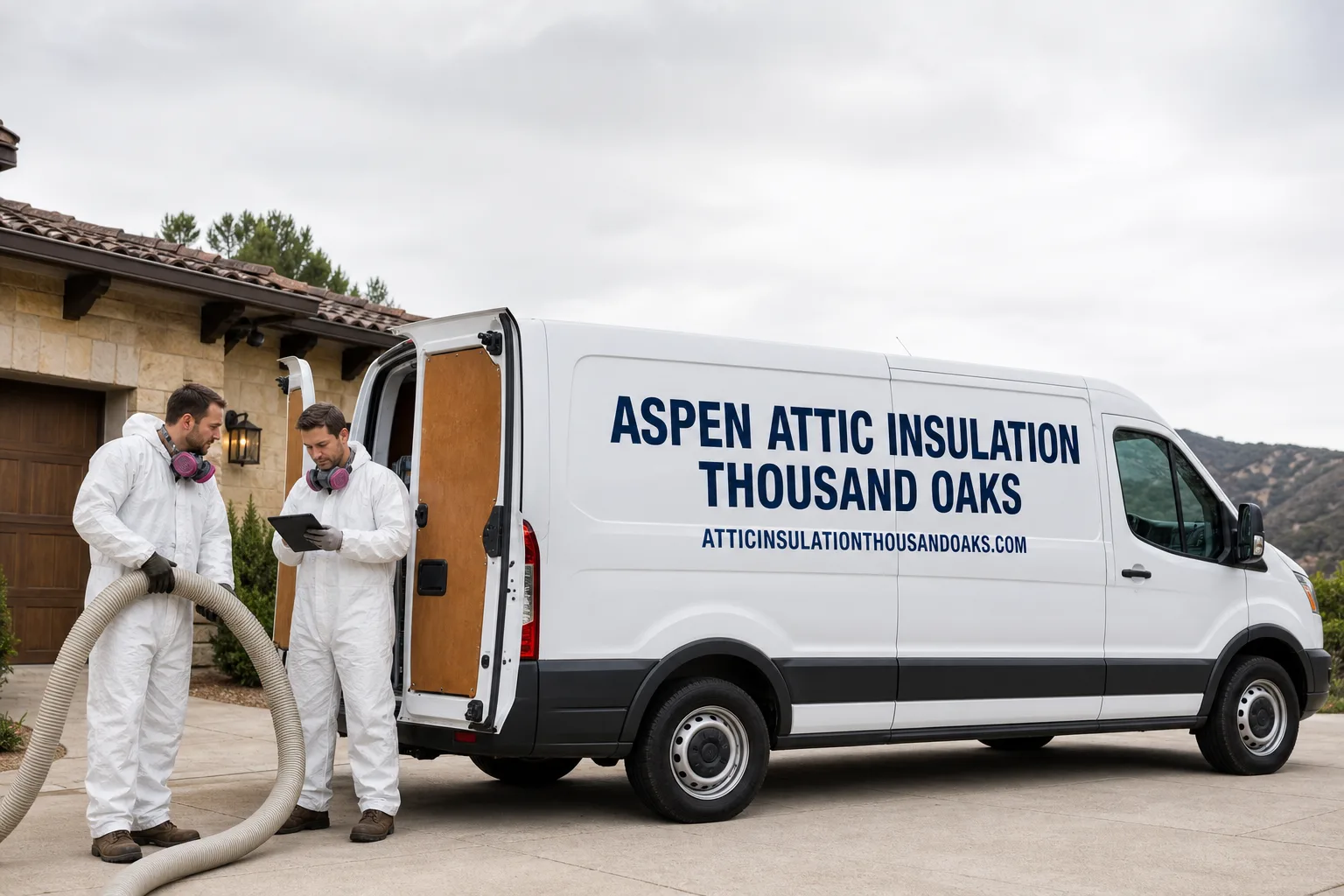
Fast, Reliable Blown In Insulation Across Simi Valley
If your Simi Valley home was built between the 1960s and 1990s, there’s a strong chance your attic insulation has settled far below what California’s Title 24 code requires today. We’re Aspen Attic Insulation Thousand Oaks, and our Blown In Insulation crews work in Simi Valley year-round, retrofitting older attics without tearing out drywall. A typical blown-in insulation job in Simi Valley runs $1,800 to $3,400 depending on attic size and depth, and most homes see the work completed in a single day. Call (805) 309-1610 for a written price before any work starts.
Why Aspen Attic Insulation Thousand Oaks Is Simi Valley’s Preferred Blown In Insulation Company
Simi Valley homeowners deal with a specific problem: attics that bake in 140°F-plus summer heat while second-story rooms stay uncomfortable no matter how long the AC runs. That’s the exact condition we’ve corrected in hundreds of homes across the Texas Tract, Wood Ranch, and neighborhoods along Alamo Street and Cochran Street. Homeowners here don’t just want insulation; they want to know who’s walking through the door.
Every technician we send to Simi Valley is background-checked, identity-verified, and arrives in a marked uniform with a photo ID badge. You’ll get the tech’s name and photo before the visit, so the person standing on your porch is the person we told you to expect. That’s the Threshold Standard, and it applies to every job we run in Simi Valley.
Our crews also arrive fast. Most Simi Valley calls get next-day or same-week scheduling, and our 24/7 live phone line means you never sit through a voicemail loop when you call (805) 309-1610. Every quote is written and delivered before work begins. No post-job surprises.
Blown In Insulation Contractors in Simi Valley
Blown In Insulation Contractors in Simi Valley handle loose-fiber installation, and that’s the service older homes here lean on most. The process means blowing cellulose or fiberglass fibers into the attic cavity so they fill every gap, settle into odd corners, and restore the R-value that 40 or 50 years of compression has stripped away. Simi Valley attics in the Texas Tract and along Sequoia Avenue often still hold original 1960s batts compressed to under three inches. When we blow insulation over the top, those batts stay in place and the new material brings the total depth up to R-38 or better.
What does that cost in Simi Valley? For a typical 1,200-square-foot attic, blowing fiberglass to R-38 runs $1,800 to $2,600. Larger homes with vaulted sections or limited access run higher. The work is done from inside the attic, so no drywall comes down and your family stays out of the way. Reputable local contractors do this in a day.
Air Sealing and Top Plates
Before any fibers go in, we seal the top plates and around recessed can lights. Unsealed top plates pull superheated attic air into living space, which is why so many Simi Valley AC units run nonstop in July. Sealing first makes the insulation actually hold its rated R-value.
Radiant Barrier Add-On
Hot attics don’t just need fiber; they need reflection. We often pair blown-in insulation with a radiant barrier on the rafters, which bounces heat back before it ever reaches the insulation layer. In Simi Valley’s summer, that combination matters more than insulation depth alone.
Cellulose Insulation in Simi Valley
Cellulose Insulation is a legitimate option for Simi Valley attics, especially when fire resistance is part of the conversation. Made from recycled paper treated with borate fire retardants, cellulose packs tighter than fiberglass and slows air movement better in older wall cavities. Homeowners in the foothill neighborhoods south of Highway 118, where wildfire risk shapes every upgrade decision, often choose cellulose for that fire-rated treatment.
Blowing cellulose into a Simi Valley attic typically runs $2,200 to $3,400 for a 1,200-square-foot space to reach R-38. It costs more than fiberglass per inch, but it performs better in windy or leaky attic cavities and gives you a denser thermal barrier. We source cellulose from GreenFiber and Knauf, so the material is consistent batch to batch.
Wildfire Hardening Benefits
Cellulose treated with borate doesn’t just resist fire; it also discourages pests. In Simi Valley’s foothill tracts, where ember intrusion is a real concern, that’s a practical advantage. The material settles less than loose fiberglass over time, so the R-value you pay for is the R-value you keep for years.
When to Choose Cellulose Over Fiberglass
If your Simi Valley home has older wall cavities with no insulation at all, cellulose is the better retrofit. Dense-packed cellulose fills irregular stud bays better than fiberglass can. For open attics, fiberglass blown over existing batts remains the more cost-effective path.
Trusted Brands We Service in Simi Valley
Our Simi Valley crews work with materials from Owens Corning, Johns Manville, Knauf, and Rockwool, and we stock local inventory so we’re not waiting on a distributor when your attic is already open. Owens Corning AttiCat fiberglass is our default for blow-over-retrofit work in Simi Valley, because it maintains loft well in high-heat attics. Knauf and Rockwool products appear more often in fire-hardening and sound-control applications. When you call, we’ll tell you exactly which product fits your home and why, in writing, before any work starts.
Common Blown In Insulation Problems We See in Simi Valley Homes
- Settled 1960s fiberglass batts. Original insulation in homes around the Texas Tract and along Erringer Road has often compressed to under three inches, leaving attics with R-values in the single digits. That’s why upstairs rooms cook in August.
- Unsealed top plates pulling hot attic air. Superheated air enters the living space around wall plates and old can lights, so the AC runs constantly without cooling the upstairs. Air sealing before blowing insulation is what actually fixes this.
- Missing attic ventilation. Many Simi Valley attics have insufficient intake or exhaust venting, which traps hot air and accelerates degradation of any insulation. A ridge vent or added soffit vents makes blown-in fiber last longer and work better.
- Wildfire ember risk on exposed roof decks. Poor insulation and ventilation push roof deck temperatures higher, which increases ember ignition danger in Simi Valley’s high-risk zones. Blown-in insulation paired with a radiant barrier lowers that deck temperature meaningfully.
Pricing for Blown In Insulation in Simi Valley, CA
Expect to pay $1,800 to $3,400 for a full attic blow-in job in Simi Valley, depending on square footage, target R-value, and whether air sealing and radiant barrier are included. Fiberglass blow-over on a 1,200-square-foot attic lands around $1,800 to $2,600. Cellulose runs higher at $2,200 to $3,400. Air sealing adds $400 to $800. Radiant barrier adds $1,200 to $2,000 depending on roof complexity. The written quote we hand you before any work starts is the price you pay. Call (805) 309-1610 for a free estimate, and we’ll give you a number that includes everything.
We Also Serve Cities Near Simi Valley
If you’re just outside Simi Valley, we also run crews to Moorpark, Oak Park, Thousand Oaks, and Westlake Village. Same Threshold Standard, same written pricing, same background-checked techs. Our Simi Valley scheduling covers all these areas without routing delays.
Serving Simi Valley, CA - Our Local Coverage Area
We’re based in the Simi Valley area and know this community well. Use the map below to see our service coverage - if you’re nearby, we can almost certainly help.
FAQs About Blown In Insulation in Simi Valley
Blown-in insulation raises attic R-value to meet or exceed Title 24 minimums, which require R-22 to R-38 attics depending on climate zone, and Simi Valley sits in a zone where R-38 is the practical target for new work. On the wildfire side, insulation that keeps roof deck temperatures lower reduces ember ignition risk, and cellulose’s borate treatment adds fire resistance directly. Call (805) 309-1610 and we’ll assess what your attic needs to pass inspection and harden your home.
Yes, and that’s the most common job we do in Simi Valley. Old compressed batts stay in place, and we blow Owens Corning AttiCat or Johns Manville fiberglass over the top to bring total depth to R-38. The process takes one day and doesn’t require demolishing anything. For an exact price on your attic’s square footage, call (805) 309-1610.
Fiberglass with a radiant barrier is the standard for Simi Valley attics because fiberglass holds its loft in high heat, and the radiant barrier blocks heat before it reaches the insulation. Cellulose is the stronger choice if fire resistance and air-sealing performance matter more, especially in foothill neighborhoods. We’ll tell you which direction makes sense for your roof and your budget when you call (805) 309-1610.
Radiant barrier reflects heat away from the insulation layer, keeping the attic cavity cooler and allowing the blown-in fiber to actually reach its rated R-value in July conditions. You don’t need both in a mild climate, but in Simi Valley, where attic temps hit 140°F, insulation without a barrier performs significantly below spec. Most of our retrofits include both for that reason.
It helps both, because heat moves through your ceiling in both directions. Simi Valley winters aren’t severe, but cool nights pull heat out of under-insulated attics just like summer pushes heat in. Blown-in insulation slows that loss in winter and blocks heat gain in summer. Expect meaningful savings on both heating and cooling, and a free estimate from us at (805) 309-1610.
Written by Garrett Sloane, Owner at Aspen Attic Insulation Thousand Oaks, serving Simi Valley since 2002.